How to disassemble the diesel engine correctly when the diesel generator set malfunctions or maintenance is required? The disassembly steps and methods for different types of diesel engines may not be completely consistent, but the fundamental requirements are common. Dingbo Electric provides a learning reference for diesel generator users or technicians. Taking the 6135 diesel engine as an example, the disassembly process and method of diesel engines are explained. Please read the following steps carefully:
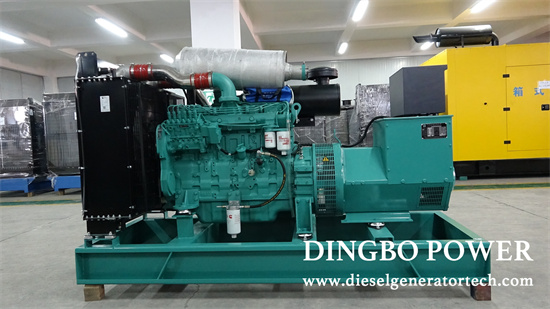
1. Drain the oil and water
(1) Unscrew the drain switches of the machine body, water tank, and oil cooler to drain the water completely.
(2) Drain all the oil from the oil pan and oil cooler.
(3) Close the fuel tank valve, remove all fuel pipes, and drain the diesel from the fuel tank.
(4) Keep the maintenance site clean when draining water, engine oil, and diesel.
2. Remove instruments, pipelines, and accessories
(1) Remove the sensing plugs of the oil temperature gauge and water temperature gauge.
(2) Remove the oil pressure gauge and pipeline.
(3) Remove the dashboard.
(4) Remove the hose of the tachometer.
(5) Remove all oil, diesel, and water pipes.
(6) Remove the air filter, muffler, intake pipe, and exhaust pipe.
(7) Remove all components of the cooling system.
(8) Dismantle all components of the fuel system.
(9) Remove the oil filter, oil cooler, etc.
(10) Remove the starting system and charging system from the diesel engine.
3. Remove the cylinder head
(1) Before disassembling the cylinder head, the valve cover should be removed first.
(2) When dismantling the rocker arm, first remove the oil pipe and the return screw of the cylinder head.
(3) Remove the rocker arm seat, preferably both rocker arm seats should be removed and placed together.
(4) When disassembling the screw of the flap, connect it diagonally from the outside to the inside, and remove the other components in order.
4. Disassemble the piston connecting rod assembly
When disassembling the piston connecting rod assembly, it is necessary to first remove the carbon deposits on the upper part of the cylinder liner. If the inner wall of the cylinder liner is severely worn, a triangular scraper can be used to scrape it.
(1) Rotate the crankshaft to place the connecting rod big end on the side cover of the machine body, and then use a socket and torque wrench to remove the connecting rod screws 2-3 times. If it is difficult to remove the connecting rod big head cover after removing both connecting rod screws, the extension rod of the socket wrench can be inserted into the connecting rod big head bolt hole, and then the extension rod can be shaken up and down. If it cannot be removed yet, you can use a small hammer to gently tap the connecting rod, and it can generally be removed. During the extraction process, hold the large head cover with your hand to avoid falling into the oil casing and damaging the bearing shell.
(2) After removing the large head cover, slowly rotate the crankshaft. Place the piston at the top dead center. At this point, push open the connecting rod big end with your hand to disengage it from the crankshaft journal, and then slowly rotate the crankshaft. When there is a gap of about 10cm between the crankshaft and the connecting rod big end, insert a wooden rod, and then use the shaft neck as a fulcrum to pry the wooden rod and push the piston connecting rod assembly out of the cylinder liner. During the process of removing water, prevent the connecting rod head from hitting the inner wall of the cylinder.
(3) After the piston connecting rod assembly is removed, the connecting rod bearing shell, big head cover, and screws should be installed back in place on the connecting rod big head, and a label should be attached to prove which cylinder the assembly belongs to.
5. Disassemble cylinder liner: When disassembling the cylinder head liner, a special puller can be used, or the oil casing can be removed, and then the cylinder liner can be driven out from below with a wooden stick.
As a professional diesel generator manufacturer, we always insist on using first-class talents to build a first-class enterprise, create first-class products, create first-class services, and strive to build a first-class domestic enterprise. If you would like to get more information welcome to contact us via sales@dieselgeneratortech.com.
Comments
Post a Comment