
What Should Pay Attention to When Starting Cummins Engines

Without question, it is very necessary and important to learn how to correctly start Cummins engines. If you don’t know, then take a few time to read this article and you will know what you should pay attention to when starting the engines.
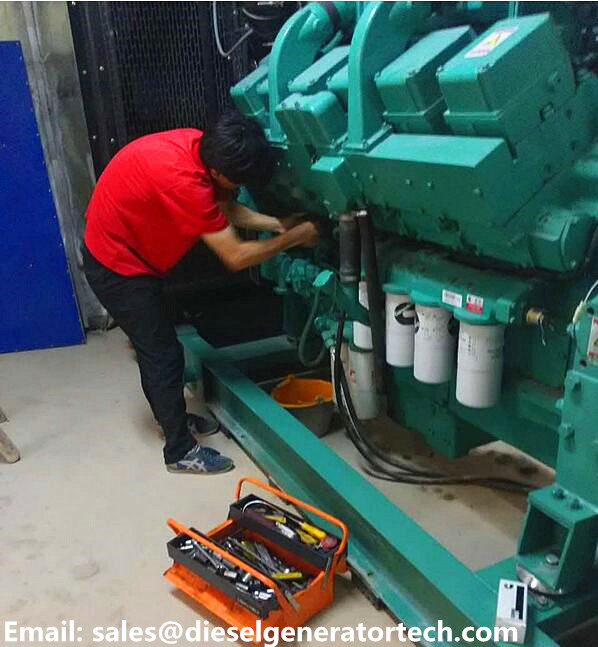

Cummins diesel genset.jpg


Staring the Engines


Please note that starting requires that clean air and fuel are supplied to the combustion chambers in the proper quantities at the correct time.


Normal Starting Procedure


Warning: Before starting, be sure that everyone is clear of the engine and equipment.

If the fuel system is equipped with an overspeed stop, push the “Reset” button before attempting to start the engine.

1. On engines equipped with an air activated prelube device, open the air valve to activate the piston in the prelube device which will lubricate all moving parts in the engine.


Note: On engines equipped with an oil pressure safety switch, hold the fuel by-pass switch in the “start” position until the engine oil pressure reaches 7 to 10 psi (48 to 69 kpa); then, move it to the “run” position.

2. Set the throttle for idle speed and disengage the driven unit.


Caution: To protect the turbocharger during start-up by not opening the throttle or accelerating above 1000 rpm until the idle speed oil pressure registers on the gauge.

3. Open the manual fuel shut-down valve, if equipped. See Fig.3. Electric shut-down valves operate as the switch is turned on. A manual override knob provided  on the forward end of the electric shut-down valve allows the valve to be opened in case of an electric power failure. To use, turn fully clockwise; return it to the run position after an electric repair.
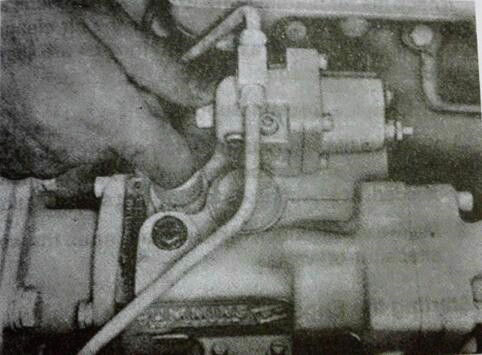

manual override knob.jpg


Warning: Check before starting Cummins engines, make sure everyone leaves the engine and equipment to prevent an accident.

4. Pull the decompression release lever (if equipped) and press the starter button or turn the key switch to the “start” position. After three or four seconds of cranking, close the decompress release lever and continue to crank until the engine fires.


Caution: To prevent permanent cranking motor damage, do not crank the engine for more than 30 seconds continuously. If the engine does not fire within the first 30 seconds, wait one to two minutes before recranking.

5. At the initial start or after oil or filter changes and after the engine has run for a few minutes, shut it down and wait 15 minutes for  the oil to drain back into the pan. Check the engine oil level again; add oil as necessary to bring the oil level to the “H” mark on dipstick. The drop in oil level is due to absorption by the oil filters. Never operate the engine with the oil level below the low level mark or above the high level mark.


Maybe You Also Like:


Operating Instructions of Cummins Engines

Comments

Popular posts from this blog

Diesel Generator Power Ratings: Standby vs Prime vs Continuous

Diesel generator sets are commonly used in a variety of sectors due to their dependable performance and high efficiency. They can be used for emergency power supply in the event of a power cut or used in places without connection to a power grid. When selecting a diesel generator for your home or business, you need to consider many factors, such as generator’s ratings. In this article, we’ll explain the three basic rating types - standby, prime, and continuous in diesel generators. ISO-8528-1:2018 defines basic generator set rating categories based on four operational categories: Emergency Standby Power (ESP), Prime Power (PRP), Continuous Power (COP) and Limited-Time Running Prime (LTP). Read on and learn the application of power ratings for engines used in generating sets. Standby Power Rating Standby Power(ESP) is used to supply emergency power when the external power supply is interrupted, such as power outages. Standby power rated generators can supply reliable electricity as t...

Main Structural Features of Natural Gas Engine - Weichai WP13NG Gas Generator

1.1 Main structural features of natural gas engine ● A cover per cylinder, dependable operation, easy disassembly. ● Frame-type main bearing structure and high complete machine rigidity which benefits the reliability and  service life of complete machine. ● Electronic throttle is adopted to control engine revolving speed. ● Mixture supply system uses mixer to regulate air-fuel ratio and adopts proportional mix and supercharged inter-cooling method to stabilize gas supply. ● Water-cooling middle case turbocharger applicable to gas engine features is selected and circulating  water shall be used to cool down turbocharger lubrication cooling oil so as to effectively prevent  pressure bearing lubricating oil from coking and to improve turbocharger’s reliability. ● Designed gas mixing system satisfies gas fuel features to effectively support stable lean burn and enhance thermal efficiency. ● Two pairs of friction couples of inlet, outl...

What Should You Pay Attention to in Routine Maintenance of Diesel Generator Sets

In modern society, the stability of power supply is directly related to the operation efficiency of enterprises and people's quality of life. Diesel generators have become an indispensable backup power supply or main power source in various industries due to their high efficiency, durability and reliability. However, to ensure the smooth operation and optimal performance of the generator sets, regular maintenance is essential. Here is what you need to pay attention to in the routine maintenance of diesel generators. Keep your generator clean It’s important to keep the generator’s exterior and the generator room clean. Regularly remove any dirt, dust, or debris that may accumulate to on the generator’s surface. This is not only for the sake of beauty, but also for the smooth operation of the unit. Cleaning the generator’s exterior, air intake vents, exhaust outlets and generator room can effectively reduce the risk of generator overheating. In addition, check if the connection bol...