
Primary and Secondary Frequency Regulation of Diesel Generator Sets

What is the difference between primary frequency regulation and secondary frequency regulation of diesel generator sets? The primary frequency modulation is to participate in the power grid cycle adjustment with certain amplitude limiting and dead zone, and the secondary frequency modulation is to accept the command of middle note or manual command. The primary frequency regulation is carried out by the governor device, and the small frequency regulation range belongs to fine tuning. The secondary frequency modulation is performed by a frequency modulator. The large frequency modulation range belongs to coarse tuning, primary frequency modulation. When each diesel generator set is connected to the grid for operation, the frequency of the grid changes due to external load changes. At this time, the regulating system of each diesel generator unit participates in the regulation function, changing the load carried by each diesel generator unit to balance it with external loads.
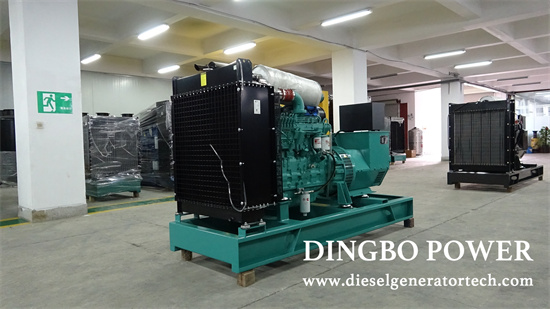

diesel generator for sale


At the same time, efforts are also made to reduce changes in the frequency of the power grid, which is known as primary frequency regulation. Secondary frequency regulation and primary frequency regulation are differential adjustments that do not maintain the frequency of the power grid, but can only mitigate the degree of change in the frequency of the power grid. So it is also necessary to use synchronizers to increase or decrease the load of certain units to restore the frequency of the power grid, which is called secondary frequency regulation. Only after secondary frequency regulation can the grid frequency accurately maintain a constant value.


There are currently two methods for secondary frequency regulation, with the dispatch center ordering each factory to adjust its load. The diesel generator set adopts AGC mode to achieve automatic load dispatch of the diesel generator set. Simply put, primary frequency regulation refers to the automatic adjustment of the diesel generator unit load by the turbine speed control system based on changes in grid frequency to restore grid frequency. Secondary frequency regulation refers to the manual adjustment of unit load based on grid frequency.


Guangxi Dingbo Power Equipment Manufacturing Co.,Ltd was founded in 1974 and is one of the earliest manufacturers of generators and diesel generator sets in China. The company has a registered capital of 218.88 million yuan. The company covers an area of 86,000 square meters and a building area of 55,000 square meters. There are more than 660 employees, including 456 professional technicians and 106 senior technicians. It has 46 sales and service outlets nationwide. The main products are diesel engines, generator sets, and diesel generators, providing users with a one-stop service of design, supply, debugging and maintenance at any time. Dingbo has always insisted on using first-class talents, building first-class enterprises, manufacturing first-class products, creating first-class services, and making every effort to build a first-class domestic enterprise. If any question please feel free to visit our website https://www.dieselgeneratortech.com/ or send email to sales@dieselgeneratortech.com.

Comments

Popular posts from this blog

Diesel Generator Power Ratings: Standby vs Prime vs Continuous

Diesel generator sets are commonly used in a variety of sectors due to their dependable performance and high efficiency. They can be used for emergency power supply in the event of a power cut or used in places without connection to a power grid. When selecting a diesel generator for your home or business, you need to consider many factors, such as generator’s ratings. In this article, we’ll explain the three basic rating types - standby, prime, and continuous in diesel generators. ISO-8528-1:2018 defines basic generator set rating categories based on four operational categories: Emergency Standby Power (ESP), Prime Power (PRP), Continuous Power (COP) and Limited-Time Running Prime (LTP). Read on and learn the application of power ratings for engines used in generating sets. Standby Power Rating Standby Power(ESP) is used to supply emergency power when the external power supply is interrupted, such as power outages. Standby power rated generators can supply reliable electricity as t...

Main Structural Features of Natural Gas Engine - Weichai WP13NG Gas Generator

1.1 Main structural features of natural gas engine ● A cover per cylinder, dependable operation, easy disassembly. ● Frame-type main bearing structure and high complete machine rigidity which benefits the reliability and  service life of complete machine. ● Electronic throttle is adopted to control engine revolving speed. ● Mixture supply system uses mixer to regulate air-fuel ratio and adopts proportional mix and supercharged inter-cooling method to stabilize gas supply. ● Water-cooling middle case turbocharger applicable to gas engine features is selected and circulating  water shall be used to cool down turbocharger lubrication cooling oil so as to effectively prevent  pressure bearing lubricating oil from coking and to improve turbocharger’s reliability. ● Designed gas mixing system satisfies gas fuel features to effectively support stable lean burn and enhance thermal efficiency. ● Two pairs of friction couples of inlet, outl...

What Should You Pay Attention to in Routine Maintenance of Diesel Generator Sets

In modern society, the stability of power supply is directly related to the operation efficiency of enterprises and people's quality of life. Diesel generators have become an indispensable backup power supply or main power source in various industries due to their high efficiency, durability and reliability. However, to ensure the smooth operation and optimal performance of the generator sets, regular maintenance is essential. Here is what you need to pay attention to in the routine maintenance of diesel generators. Keep your generator clean It’s important to keep the generator’s exterior and the generator room clean. Regularly remove any dirt, dust, or debris that may accumulate to on the generator’s surface. This is not only for the sake of beauty, but also for the smooth operation of the unit. Cleaning the generator’s exterior, air intake vents, exhaust outlets and generator room can effectively reduce the risk of generator overheating. In addition, check if the connection bol...