
Structural Characteristics of Diesel Engine Water Pump Part 2

This article continues to introduce the working principle and structural characteristics of the engine water pump for diesel generator users.
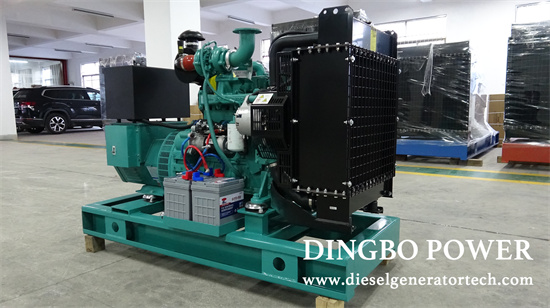

diesel generator manufacturer


The water pump shaft is supported on the housing with two bearings, which are filled with lubricating grease and positioned with a spacer between the bearings. The front end of the front bearing has a retaining ring to fix the bearing and prevent the axial force generated by the fan rotation from moving the pump shaft forward. The pump shaft is equipped with a water throwing ring. When the water seal leaks, the water seeping forward is blocked by the water throwing ring and thrown towards the inspection hole to prevent damage to the bearing. In order to reduce the burden on the water throwing ring, a water blocking groove is installed on the pump shaft (between the water throwing ring and the water seal). The bearing is single-sided sealed, and the surface with oil seal should be installed facing both ends of the shaft. When the oil chamber is filled with lubricating grease, in order to avoid damage to the oil seal, there is a special hole on the housing that is connected to the atmosphere, so that air can be released during oil injection and oil can expand and overflow.


In order to prevent the cooling water in the inlet chamber from leaking forward along the pump shaft, a self tightening water seal is installed at the place where the pump shaft passes out of the inlet chamber. It is composed of a water seal gasket, a water seal cup, and a spring made of laminated laminated wood. The sealing gasket and water seal bowl are placed on the shaft, and the protruding part of the gasket is clamped in two notches of the pump housing water seal seat. The water seal cup is compressed between the gasket and the steel water seal seat ring with a spring to prevent water leakage from its front end face. To improve the sealing effect, circular grooves are pressed on the two end fitting surfaces of the water seal gasket. The front end of the impeller is pressed against the rubberwood gasket, sliding and sealing with the rubberwood gasket. The processing size ensures a certain pre tightening force on the water seal spring, so that the rubber gasket can still have sealing ability after being ground thin. Some engine water pumps adopt a compact bearing inner ring structure that is integrated with the shaft and sealed at both ends. Lubricating oil is added in one go during the assembly of the water pump and is not added during use.


In summary, the function of a water pump is to force the circulation of cooling water within the cooling system, playing a significant role in cooling and dissipating heat from diesel engines.


As a professional diesel generator manufacturer, we always insist on using first-class talents to build a first-class enterprise, create first-class products, create first-class services, and strive to build a first-class domestic enterprise. If you would like to get more information welcome to contact us via sales@dieselgeneratortech.com.

Comments

Popular posts from this blog

Diesel Generator Power Ratings: Standby vs Prime vs Continuous

Diesel generator sets are commonly used in a variety of sectors due to their dependable performance and high efficiency. They can be used for emergency power supply in the event of a power cut or used in places without connection to a power grid. When selecting a diesel generator for your home or business, you need to consider many factors, such as generator’s ratings. In this article, we’ll explain the three basic rating types - standby, prime, and continuous in diesel generators. ISO-8528-1:2018 defines basic generator set rating categories based on four operational categories: Emergency Standby Power (ESP), Prime Power (PRP), Continuous Power (COP) and Limited-Time Running Prime (LTP). Read on and learn the application of power ratings for engines used in generating sets. Standby Power Rating Standby Power(ESP) is used to supply emergency power when the external power supply is interrupted, such as power outages. Standby power rated generators can supply reliable electricity as t...

How to Connect A Diesel Generator to Your House?

Diesel generators are fuel-efficient and reliable, which can almost meet the power needs of any application. If you want to power the whole house during power shortages, it’s a good choice to choose a diesel generator set as the backup electricity supply. But how to connect a diesel generator to your house? Read on and you will find the answer. Options to connect a diesel generator to your home   Keep in mind that never plug your generator directly into the mains, or it will cause back feeding, damage your appliances and be life-threatening for utility workers. Generally, you can choose to connect a generator to your house by using extension cords or a transfer switch. Understanding the difference between them is helpful for you to choose the right type. Extension cords   Typically, extension cords are suitable for smaller diesel generators that used for short term. They require no installation and are cost-effective. If you need to power only some basic appliances such as...

What Should You Pay Attention to in Routine Maintenance of Diesel Generator Sets

In modern society, the stability of power supply is directly related to the operation efficiency of enterprises and people's quality of life. Diesel generators have become an indispensable backup power supply or main power source in various industries due to their high efficiency, durability and reliability. However, to ensure the smooth operation and optimal performance of the generator sets, regular maintenance is essential. Here is what you need to pay attention to in the routine maintenance of diesel generators. Keep your generator clean It’s important to keep the generator’s exterior and the generator room clean. Regularly remove any dirt, dust, or debris that may accumulate to on the generator’s surface. This is not only for the sake of beauty, but also for the smooth operation of the unit. Cleaning the generator’s exterior, air intake vents, exhaust outlets and generator room can effectively reduce the risk of generator overheating. In addition, check if the connection bol...