
Structural Characteristics of Diesel Engine Water Pump Part 1

Simply put, the function of the engine water pump in a diesel generator set is to cool the engine and prevent it from overheating and breaking down.
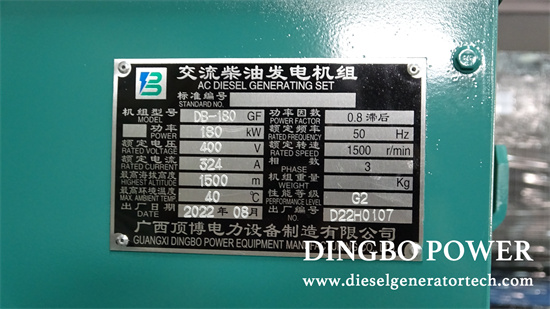

diesel generating set


The working principle of the diesel engine water pump is to drive the water pump bearing and impeller to rotate through the pulley. The coolant in the water pump is driven by the impeller to rotate together, and is thrown towards the edge of the water pump housing under the action of centrifugal force, while generating a certain pressure, and then flows out from the outlet or water pipe. At the center of the impeller, the pressure decreases due to the coolant being thrown out. The coolant in the water tank is sucked into the impeller through the water pipe under the pressure difference between the inlet of the water pump and the center of the impeller, achieving the reciprocating circulation of the coolant.


The structural characteristics of the engine water pump:


The engine water pump is composed of the pump housing, pump cover plate, and water pump shaft. The pump housing is often made of cast iron or aluminum alloy, and the pump cover plate and gasket are installed behind the pump housing with screws to seal the pump housing. There is a water outlet connected to the water jacket on the pump cover. The inlet of the pump casing is connected to the radiator drain chamber with a rubber hose. There is a bypass pipe joint on the top of the pump casing. As the rubber hose is connected to the outlet pipe, when the temperature of the cooling water is low (below 76 ℃), some of the cooling water in the outlet pipe enters the engine water pump.

The interior of the pump casing is the working chamber of the impeller. A partition is cast to divide the working chamber into two parts: the inlet chamber and the outlet chamber. The inlet chamber is connected to the inlet and bypass ports. The circumferential surface of the outlet chamber is made into a spiral shape to improve the pumping efficiency of the water pump. The inlet chamber and outlet chamber are connected by a balance hole. To increase the water pressure entering the chamber and reduce the generation of bubbles in the inlet chamber. The cast iron impeller adopts a rear curved blade, which is connected to the rear end of the water pump shaft through a cutting plane and fastened with screws. There are three small holes on the impeller to balance the pressure before and after the impeller when the water pump is working, which helps to increase the pumping capacity of the water pump. Some water pump impellers are pressed with plastic, which is lightweight and has good corrosion resistance. Some blades adopt a radial design, while others alternate in length and length. Half of the blades can extend into the inlet chamber to increase the inlet cross-section.


Dingbo Power was founded in 1974 and is one of the earliest manufacturers of generators and diesel generator sets in China. If you want get more information, please feel free to send email to sales@dieselgeneratortech.com we will pay highly attention on your question.

Comments

Popular posts from this blog

Diesel Generator Power Ratings: Standby vs Prime vs Continuous

Diesel generator sets are commonly used in a variety of sectors due to their dependable performance and high efficiency. They can be used for emergency power supply in the event of a power cut or used in places without connection to a power grid. When selecting a diesel generator for your home or business, you need to consider many factors, such as generator’s ratings. In this article, we’ll explain the three basic rating types - standby, prime, and continuous in diesel generators. ISO-8528-1:2018 defines basic generator set rating categories based on four operational categories: Emergency Standby Power (ESP), Prime Power (PRP), Continuous Power (COP) and Limited-Time Running Prime (LTP). Read on and learn the application of power ratings for engines used in generating sets. Standby Power Rating Standby Power(ESP) is used to supply emergency power when the external power supply is interrupted, such as power outages. Standby power rated generators can supply reliable electricity as t...

How to Connect A Diesel Generator to Your House?

Diesel generators are fuel-efficient and reliable, which can almost meet the power needs of any application. If you want to power the whole house during power shortages, it’s a good choice to choose a diesel generator set as the backup electricity supply. But how to connect a diesel generator to your house? Read on and you will find the answer. Options to connect a diesel generator to your home   Keep in mind that never plug your generator directly into the mains, or it will cause back feeding, damage your appliances and be life-threatening for utility workers. Generally, you can choose to connect a generator to your house by using extension cords or a transfer switch. Understanding the difference between them is helpful for you to choose the right type. Extension cords   Typically, extension cords are suitable for smaller diesel generators that used for short term. They require no installation and are cost-effective. If you need to power only some basic appliances such as...

What Should You Pay Attention to in Routine Maintenance of Diesel Generator Sets

In modern society, the stability of power supply is directly related to the operation efficiency of enterprises and people's quality of life. Diesel generators have become an indispensable backup power supply or main power source in various industries due to their high efficiency, durability and reliability. However, to ensure the smooth operation and optimal performance of the generator sets, regular maintenance is essential. Here is what you need to pay attention to in the routine maintenance of diesel generators. Keep your generator clean It’s important to keep the generator’s exterior and the generator room clean. Regularly remove any dirt, dust, or debris that may accumulate to on the generator’s surface. This is not only for the sake of beauty, but also for the smooth operation of the unit. Cleaning the generator’s exterior, air intake vents, exhaust outlets and generator room can effectively reduce the risk of generator overheating. In addition, check if the connection bol...