When purchasing a diesel generator set, one should understand the overall structure of the diesel generator set in order to choose a more suitable diesel generator set and avoid the trouble and futile work caused by purchasing errors. As is well known, diesel engines can output power during operation. In addition to the combustion chamber and crank connecting rod mechanism directly converting the thermal energy of fuel into mechanical energy, corresponding mechanisms and systems must also be in place to ensure that these mechanisms and systems are interrelated and coordinated. Diesel engines of different types and purposes have different mechanisms and systems, but their functions are basically the same. Diesel engines are mainly composed of body components and crank connecting rod mechanisms, valve distribution mechanisms and intake and exhaust systems, fuel supply and speed control systems, lubrication systems, cooling systems, etc., as well as starting devices and other mechanisms and systems
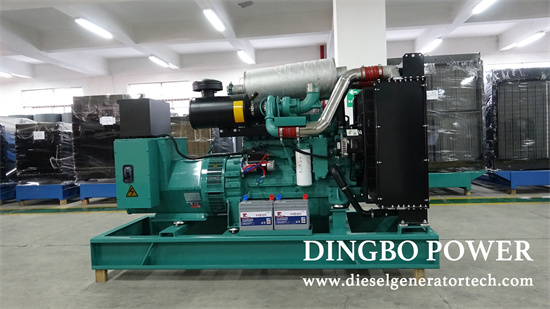
(1) The body components and crank connecting rod mechanism mainly include the cylinder body, cylinder head, and crankcase. It is the assembly base for diesel engine mechanical systems, with many components including diesel engine crank and connecting rod mechanisms, valve distribution mechanisms, intake and exhaust systems, fuel supply and speed control systems, lubrication systems, and cooling systems. The cylinder head and piston crown together form the combustion chamber space, which is also equipped with many parts, intake and exhaust ports, and oil passages. The conversion of thermal energy into mechanical energy needs to be completed through a crank connecting rod mechanism. This mechanism is the main moving component of a diesel engine, consisting of a piston, connecting rod, crankshaft, flywheel, and crankcase. When a diesel engine burns, the piston bears the pressure of gas expansion and rotates the crankshaft through the connecting rod, converting the reciprocating linear motion of the piston into rotational motion of the crankshaft. The valve system and valve mechanism of the intake and exhaust systems are composed of valve groups (intake valves, exhaust valves, valve guides, valve seats, and valve springs, etc.) and transmission groups (tappets, tappets, rocker arms, rocker arm shafts, camshafts, and timing gears, etc.). The intake and exhaust system consists of an air filter, intake pipe, exhaust pipe, muffler, etc. The function of the valve distribution mechanism and intake and exhaust system is to timely open and close the intake and exhaust valves according to certain requirements, exhaust the exhaust gas in the cylinder, and inhale fresh air to ensure the smooth ventilation process of the diesel engine
(2) The function of the fuel supply speed control system for diesel engines is to inject a certain amount of diesel and air mixture into the combustion chamber at a certain pressure within a certain period of time for combustion work. Mainly composed of diesel engine fuel tank, fuel pump, diesel cleaner, fuel injection pump (high-pressure pump), fuel injector, and speed controller.
(3) The function of the lubrication system is to transport lubricating oil to the friction surface of the moving parts of the diesel engine, in order to reduce friction, cooling, purification, sealing, and rust, thereby reducing friction resistance and wear, taking away the heat generated by friction, and ensuring the normal operation of the diesel engine. Mainly composed of oil pump, oil filter, engine, oil radiator, various reading doors, and lubricating oil passage.
(4) The cooling system of diesel generators (divided into water cooling and air cooling) is used to transfer heat from the heated parts of the generator set, ensuring that the generator set operates at the most suitable temperature state to achieve excellent economy, power, and durability.
Dingbo Power was founded in 1974 and is one of the earliest manufacturers of generators and diesel generator sets in China. If you want get more information, please feel free to send email to sales@dieselgeneratortech.com we will pay highly attention on your question.
Comments
Post a Comment